

Waves Part 1
Topic Importance in JEE
| Metric | Value | Remarks |
|---|---|---|
| Total Questions (2017-2024) | 7 | At least one question has been included each year in JEE. |
| Weightage | 2.9% | Represents the proportion of questions from this topic. |
Yearly Question Distribution
| Year | Topic Area | Concepts Covered | Number of Questions | Difficulty Level | Key Focus Areas |
|---|---|---|---|---|---|
| 2024 | - | - | - | - | - |
| 2023 | Displacement Relation in Progressive wave | $y(x, t)=a \sin (k x-\omega t+\phi)$ | $1$ | Average | Wave equation and phase relationship |
| 2022 | Displacement in progressive wave | Particle velocity and wave velocity | $1$ | Average | Velocity relationships in waves |
| 2021 | Displacement Relation in Progressive wave | Displacement Relation in Progressive wave | $1$ | Easy | Basic wave displacement equations |
| 2020 | Vibration of string | Speed of transverse wave in a stretched string & Young’s modulus $=$ stress/strain | $1$ | Average | String tension and wave speed |
| 2019 | Basic of mech. waves Progressive & stationary waves / Vibration of string and Organ pipe | Speed of sound, Vibration of string | $2$ | Average/ Difficult | Wave propagation and standing waves |
| 2018 | Basic of Mechanical Waves | Velocity of wave in solids and fundamental frequency | $1$ | Average | Wave velocity and frequency calculations |
| 2017 | - | - | - | - | - |
Related Video
Study Notes: Wave Motion and Related Concepts
Table of Contents
- Introduction to Wave Motion
- Speed of Waves
- Sound Waves
- Displacement Relation for a Progressive or Harmonic Wave
- Principle of Superposition of Waves
- Interference of Waves
- Standing Waves
- Power and Intensity of Waves
- Summary
1. Introduction to Wave Motion
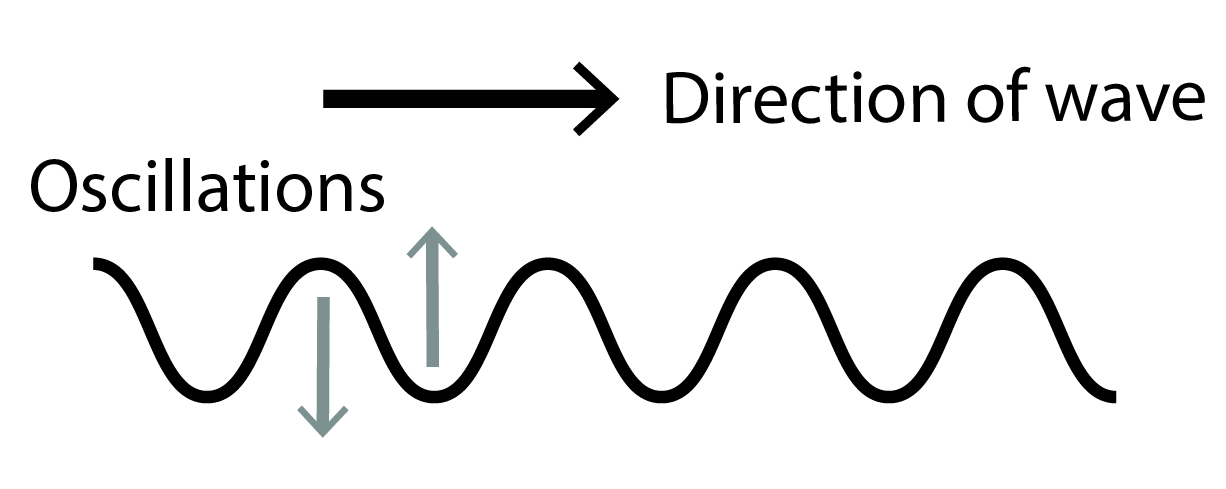
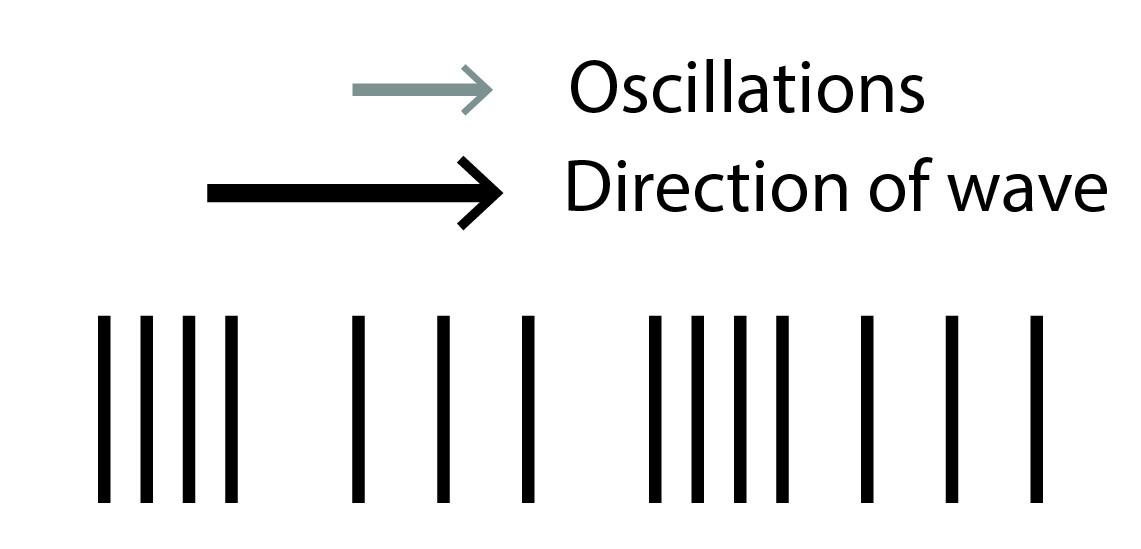
Definition: Wave motion is the propagation of disturbances through a medium, characterized by oscillations that transfer energy.
- Key Characteristics:
- Transfer of energy without the net movement of the medium.
- Oscillations of particles around their equilibrium positions.
- Can be transverse or longitudinal.
- Types of Waves:
- Mechanical Waves: Require a medium (solid, liquid, gas).
- Electromagnetic Waves: Do not require a medium (e.g., light, radio waves).
2. Speed of Waves
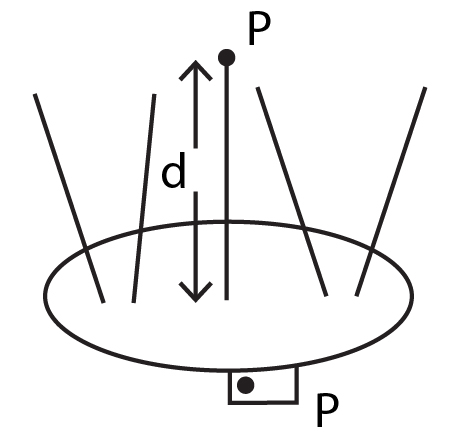
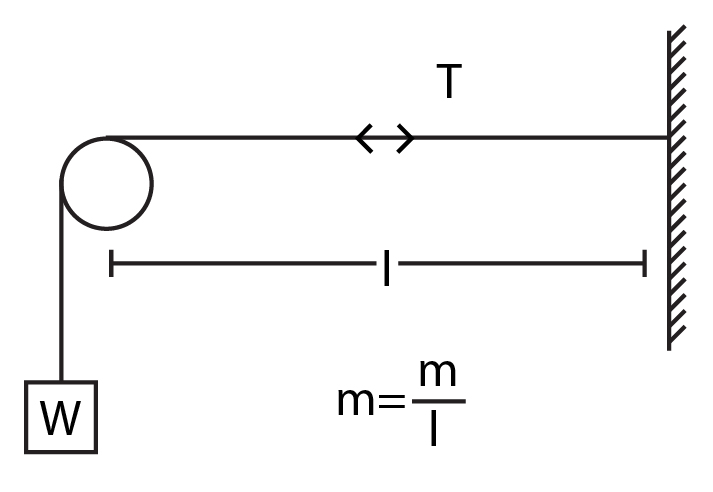
Definition: The speed of a wave is the velocity at which wavefronts travel through a medium.
- Factors Affecting Wave Speed:
- Medium Properties: Density, elasticity, temperature.
- Wave Type: Transverse vs. longitudinal.
- Frequency and Wavelength: $ v = f \lambda $
- Examples:
- Water Waves: Speed depends on water depth.
- Sound Waves: Speed varies with medium (e.g., 343 m/s in air at 20°C).
3. Sound Waves
Definition: Sound waves are longitudinal waves that require a medium for propagation, characterized by compression and rarefaction.
- Key Features:
- Compression: Regions where particles are closer together.
- Rarefaction: Regions where particles are farther apart.
- Propagation: Requires a material medium (solid, liquid, gas).
- Speed of Sound:
- In air at 20°C: $ v = 343 , \text{m/s} $
- In water: $ v = 1,480 , \text{m/s} $
- In steel: $ v = 5,960 , \text{m/s} $
4. Displacement Relation for a Progressive or Harmonic Wave
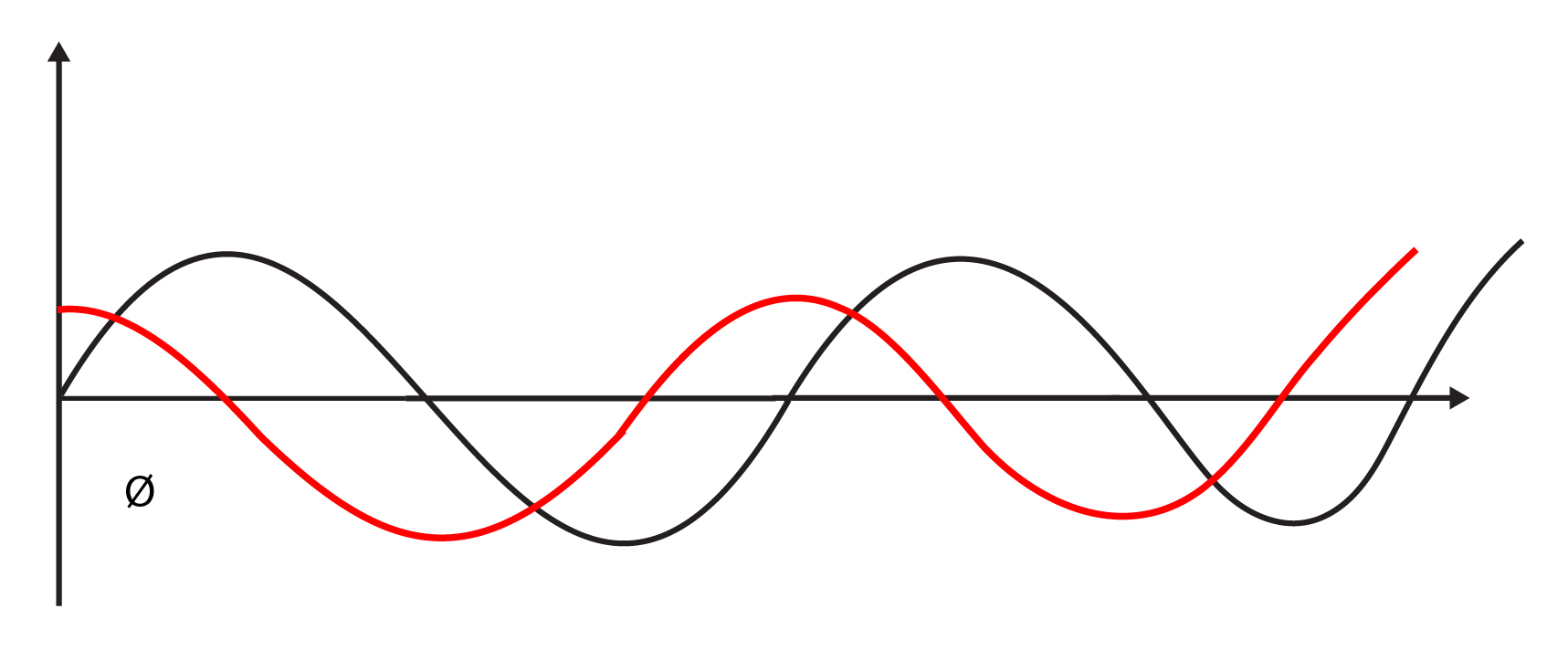
Definition: The displacement relation describes the position of a particle in a wave as a function of time and space.
- Mathematical Representation:
- $ y(x, t) = A \sin(kx - \omega t + \phi) $
- $ A $: Amplitude
- $ k $: Angular wave number
- $ \omega $: Angular frequency
- $ \phi $: Phase constant
- $ y(x, t) = A \sin(kx - \omega t + \phi) $
- Key Parameters:
- Wavelength: $ \lambda = \dfrac{2\pi}{k} $
- Frequency: $ f = \dfrac{\omega}{2\pi} $
- Wave Speed: $ v = \dfrac{\omega}{k} $
5. Principle of Superposition of Waves
Definition: When two or more waves overlap, the resultant displacement is the algebraic sum of their individual displacements.
- Key Points:
- Applies to linear waves.
- Enables the formation of interference patterns.
- Example:
- Two waves $ y_1 = A \sin(kx - \omega t) $ and $ y_2 = A \sin(kx - \omega t + \phi) $
- Resultant: $ y = y_1 + y_2 $
6. Interference of Waves
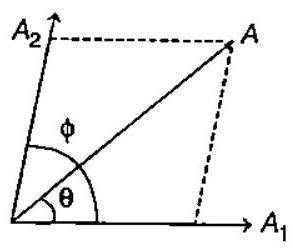
Definition: Interference is the phenomenon where two or more waves superimpose to form a resultant wave of greater, equal, or lesser amplitude.
- Types of Interference:
- Constructive Interference: Amplitudes add up.
- Destructive Interference: Amplitudes cancel out.
- Conditions for Interference:
- Waves must have the same frequency.
- Phase difference must be constant.
- Path difference must be small.
7. Standing Waves
Definition: Standing waves are formed when two identical waves traveling in opposite directions interfere.
- Formation:
- Result of superposition of incident and reflected waves.
- Key Features:
- Nodes: Points of zero displacement.
- Antinodes: Points of maximum displacement.
- Mathematical Representation:
- $ y(x, t) = 2A \sin(kx) \cos(\omega t) $
8. Power and Intensity of Waves
Definition: Power is the rate at which energy is transferred by a wave. Intensity is the power per unit area.
- Power of a Wave:
- $ P = \dfrac{1}{2} \mu \omega^2 A^2 v $
- $ \mu $: Linear mass density
- $ A $: Amplitude
- $ \omega $: Angular frequency
- $ v $: Wave speed
- $ P = \dfrac{1}{2} \mu \omega^2 A^2 v $
- Intensity of a Wave:
- $ I = \dfrac{P}{A} $
- $ I $: Intensity
- $ A $: Area over which the wave spreads
- $ I = \dfrac{P}{A} $
- Inverse Square Law:
- Intensity decreases with the square of the distance from the source: $ I \propto \dfrac{1}{r^2} $
9. Summary
| Topic | Key Points |
|---|---|
| Wave Motion | Propagation of disturbances through a medium. |
| Speed of Waves | Determined by medium and wave type. $ v = f \lambda $ |
| Sound Waves | Longitudinal, require a medium. $ v = 343 , \text{m/s} $ in air. |
| Displacement Relation | $ y(x, t) = A \sin(kx - \omega t + \phi) $ |
| Superposition | Resultant displacement is the sum of individual displacements. |
| Interference | Constructive and destructive. Requires coherent waves. |
| Standing Waves | Formed by interference of incident and reflected waves. |
| Power and Intensity | $ P = \dfrac{1}{2} \mu \omega^2 A^2 v $, $ I \propto \dfrac{1}{r^2} $ |
Conclusion
Wave motion is a fundamental concept in physics, encompassing a wide range of phenomena from sound to light. Understanding wave properties, superposition, and interference is crucial for analyzing and predicting wave behavior in various media.
 BETA
BETA



